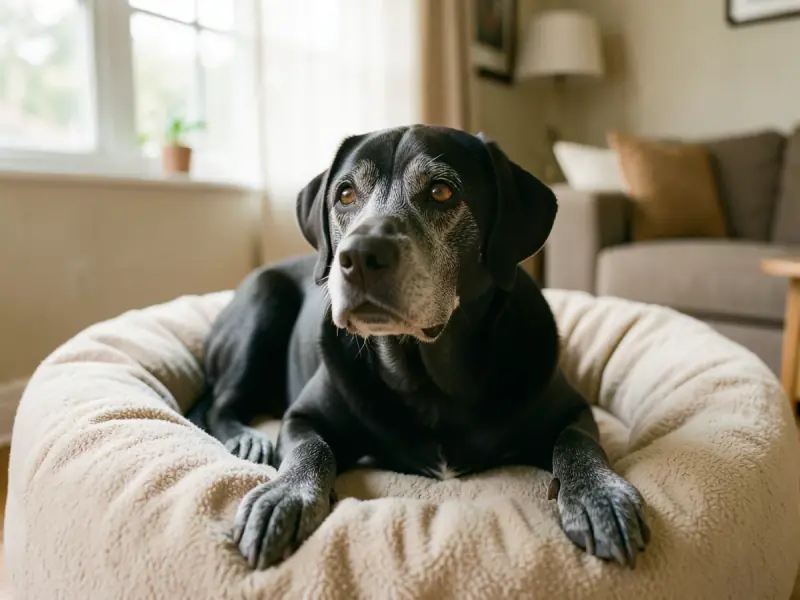
What changes at a senior visit
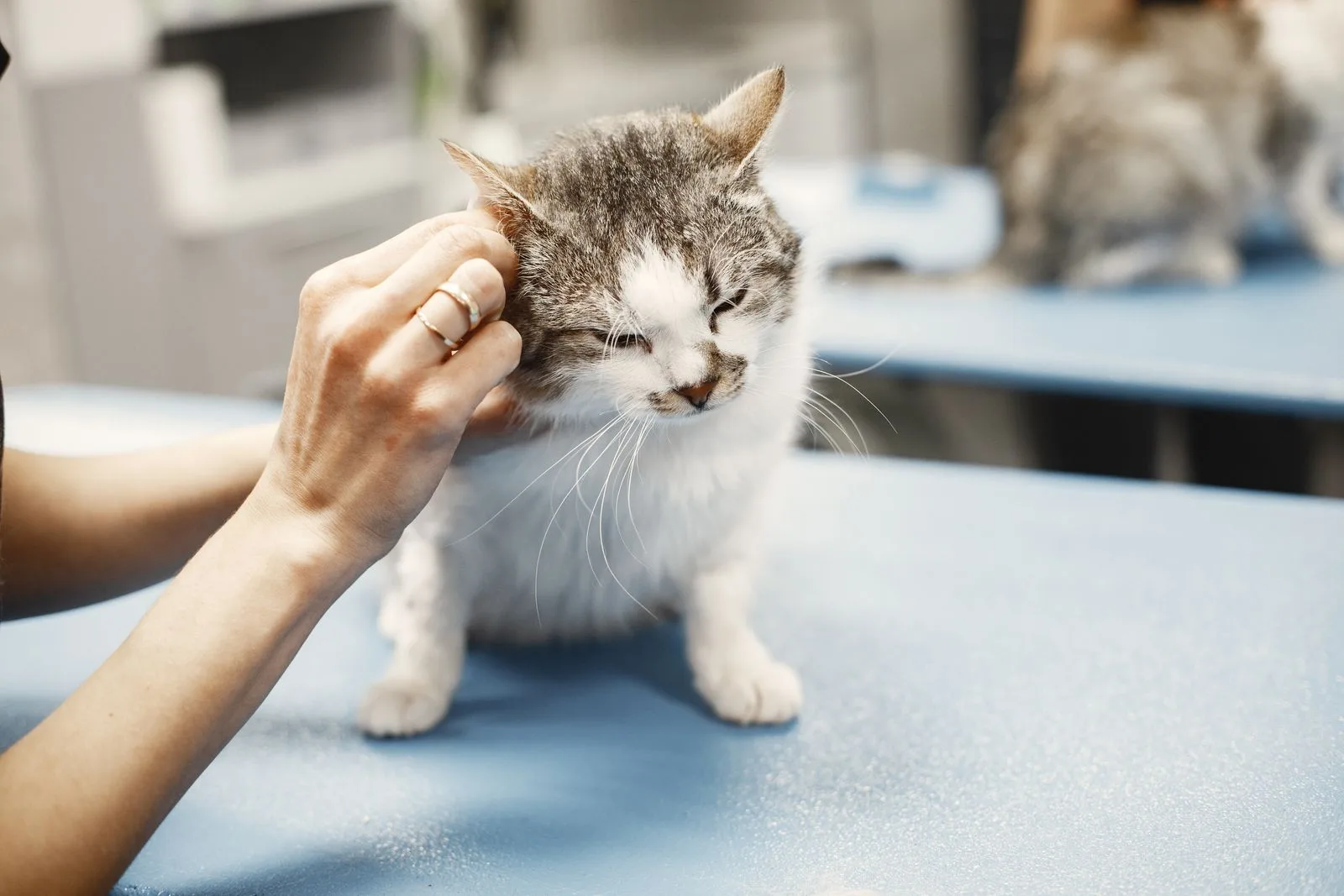
For older pets we usually suggest an exam every six months, with bloodwork and a urine test once a year, or sooner if something changes. We ask about stairs, jumping, appetite, thirst and sleep.
Comfort and mobility
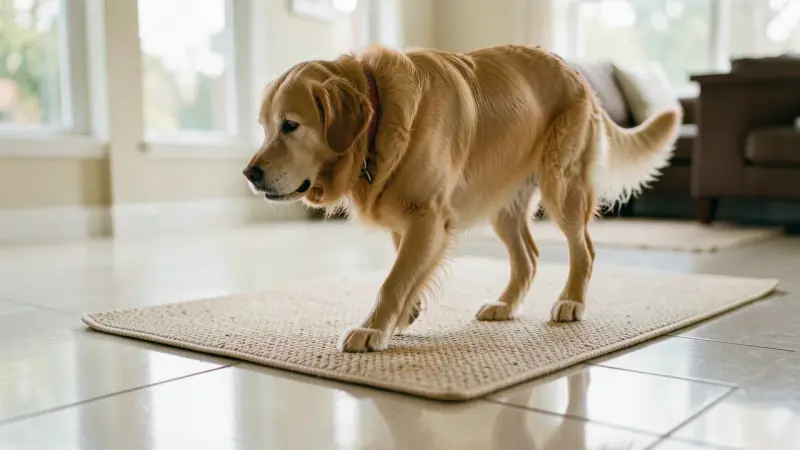
Stiff joints and trouble on slick floors are common in older pets, and there is often a lot we can do: pain medicine, weight changes, rugs and ramps at home. Dr. Danforth builds the plan with you.
When the time comes

When quality of life is fading, we talk it through with you honestly and without hurry. If you decide it is time, we set aside a quiet room and time for your family to say goodbye.
Questions about senior pet care
At what age is my pet a senior?
It depends on species and size. Large dogs age faster than small ones, and cats differ again. Your vet will tell you when to move your pet to a senior schedule.
Is bloodwork needed if my pet seems fine?
Bloodwork can show changes in the kidneys, liver or thyroid before a pet looks unwell. Your vet explains each test, and you decide what to run.
Reviewed by Dr. Corinne Danforth, DVM, October 7, 2026